Specialists in Thermal, Industrial and Technical Textiles for B2B and OEM's worldwide

Ceramic Webbing Tape
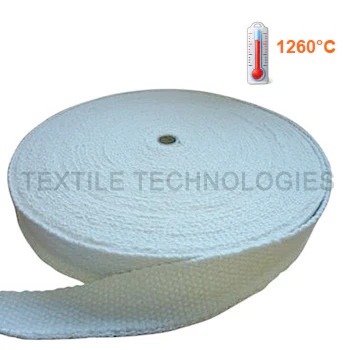
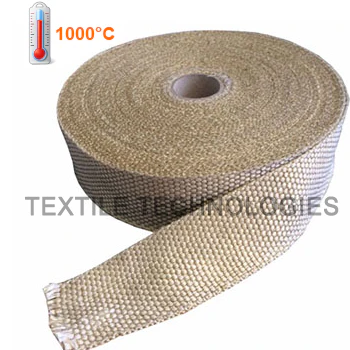
- Ceramic Webbing is woven from refractory ceramic staple fibre yarn which consists of 80% ceramic fibre and 20% organic fibre.
- The ceramic fibre itself is rated to 1260°C in optimum conditions, but the organic content will burn off at 200°C and so it should be noted that ceramic tape might ‘flash flame’ on first application. Furthermore, given 20% is driven off, the product is prone to considerable shrinking.
- These yarns are reinforced either with steel wires (1000°C) or glass filaments (550°C) in order to ensure that mechanical strength is maintained.
Applications
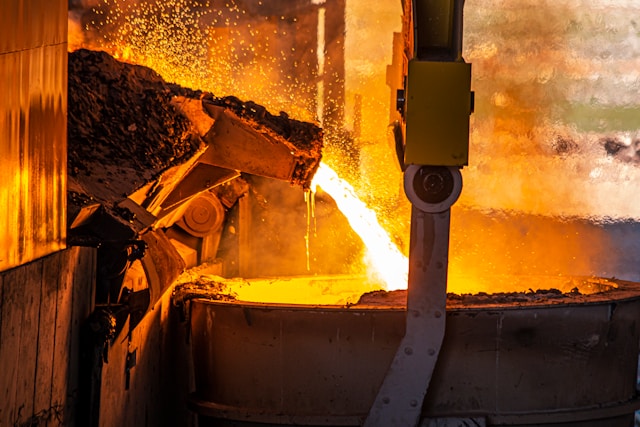
- Webbing / Ladder Door Seals for Furnaces / Kilns / Industrial Boilers.
- Stress Relieving (Welding / Heat Treatment).
Enhancements
Silicone Coating
Apply a Silicone Coating to weavelock and prevent any fibre ‘fly’. Coating one side of a webbing allows for the webbing to be cut in to strips and made in to a furnace conveyor strip curtain for hot oven / furnaces where the non-coated side faces the heat source, whilst the silicone binds the fibres and ensure longevity.
Adhesive Backing
Apply a special sacrificial high temperature self adhesive to aid applying the webbing in situ.
Graphite Dispersion
Vermiculite Dispersion
Heat Treatment / Caramelisation
Apply a heat treatment to heat set and caramelise the webbing and drive off any excess volatiles e.g. starch / binders.
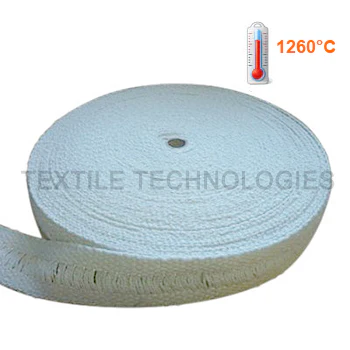
Ladder (Drop Warp)
Ceramic Webbings can have their central warp yarns removed to create a ladder effect. This is to allow the webbings to be pushed over extruded bolts and fit in place. The webbings are commonly known as glass ladder tapes in the UK or drop warp tapes in the USA. For more information please click here.
Ceramic Webbing Range
|
Collection Code
|
Yarn
|
Reinforcement
|
Weave
|
Type / Enhancement
|
Possible Thicknesses
|
Parent Code
|
Possible Widths
|
|---|---|---|---|---|---|---|---|
|
385
|
Refractory Ceramic Yarn
|
Wire
|
Plain
|
Loomstate
|
1.5/2mm
|
385-1152
|
15mm-500mm
|
|
385
|
Refractory Ceramic Yarn
|
Wire
|
Plain
|
Loomstate
|
3mm
|
385-1179
|
15mm-500mm
|
|
385
|
Refractory Ceramic Yarn
|
Wire
|
Plain
|
Loomstate
|
5/6mm
|
385-1191
|
15mm-500mm
|
|
385
|
Refractory Ceramic Yarn
|
Wire
|
Plain
|
Vermiculite Coated
|
1.5/2mm
|
385-5389
|
15mm-500mm
|
|
385
|
Refractory Ceramic Yarn
|
Wire
|
Plain
|
Vermiculite Coated
|
3mm
|
385-9402
|
15mm-500mm
|
|
385
|
Refractory Ceramic Yarn
|
Wire
|
Plain
|
Vermiculite Coated
|
5/6mm
|
385-0294
|
15mm-500mm
|
|
385
|
Refractory Ceramic Yarn
|
Wire
|
Plain
|
Graphite Coated
|
1.5/2mm
|
385-4829
|
15mm-500mm
|
|
385
|
Refractory Ceramic Yarn
|
Wire
|
Plain
|
Graphite Coated
|
3mm
|
385-1938
|
15mm-500mm
|
|
385
|
Refractory Ceramic Yarn
|
Wire
|
Plain
|
Graphite Coated
|
5/6mm
|
385-6938
|
15mm-500mm
|
|
385
|
Refractory Ceramic Yarn
|
Wire
|
Plain
|
Caramelised
|
1.5/2mm
|
385-0945
|
15mm-500mm
|
|
385
|
Refractory Ceramic Yarn
|
Wire
|
Plain
|
Caramelised
|
3mm
|
385-0067
|
15mm-500mm
|
|
385
|
Refractory Ceramic Yarn
|
Wire
|
Plain
|
Caramelised
|
5/6mm
|
385-9823
|
15mm-500mm
|
|
385
|
Refractory Ceramic Yarn
|
Wire
|
Plain
|
Adhesive Backed
|
1.5/2mm
|
385-9993
|
15mm-500mm
|
|
385
|
Refractory Ceramic Yarn
|
Wire
|
Plain
|
Adhesive Backed
|
3mm
|
385-2235
|
15mm-500mm
|
|
385
|
Refractory Ceramic Yarn
|
Wire
|
Plain
|
Adhesive Backed
|
5/6mm
|
385-1156
|
15mm-500mm
|
|
Collection Code
|
Yarn
|
Reinforcement
|
Weave
|
Type / Enhancement
|
Possible Thicknesses
|
Parent Code
|
Possible Widths
|
|---|---|---|---|---|---|---|---|
|
386
|
Refractory Ceramic Yarn
|
Glass
|
Plain
|
Loomstate
|
1.5/2mm
|
386-1152
|
15mm-500mm
|
|
386
|
Refractory Ceramic Yarn
|
Glass
|
Plain
|
Loomstate
|
3mm
|
386-1179
|
15mm-500mm
|
|
386
|
Refractory Ceramic Yarn
|
Glass
|
Plain
|
Loomstate
|
5/6mm
|
386-1191
|
15mm-500mm
|
|
386
|
Refractory Ceramic Yarn
|
Glass
|
Plain
|
Vermiculite Coated
|
1.5/2mm
|
386-5389
|
15mm-500mm
|
|
386
|
Refractory Ceramic Yarn
|
Glass
|
Plain
|
Vermiculite Coated
|
3mm
|
386-9402
|
15mm-500mm
|
|
386
|
Refractory Ceramic Yarn
|
Glass
|
Plain
|
Vermiculite Coated
|
5/6mm
|
386-0294
|
15mm-500mm
|
|
386
|
Refractory Ceramic Yarn
|
Glass
|
Plain
|
Graphite Coated
|
1.5/2mm
|
386-4829
|
15mm-500mm
|
|
386
|
Refractory Ceramic Yarn
|
Glass
|
Plain
|
Graphite Coated
|
3mm
|
386-1938
|
15mm-500mm
|
|
386
|
Refractory Ceramic Yarn
|
Glass
|
Plain
|
Graphite Coated
|
5/6mm
|
386-6938
|
15mm-500mm
|
|
386
|
Refractory Ceramic Yarn
|
Glass
|
Plain
|
Caramelised
|
1.5/2mm
|
386-0945
|
15mm-500mm
|
|
386
|
Refractory Ceramic Yarn
|
Glass
|
Plain
|
Caramelised
|
3mm
|
386-0067
|
15mm-500mm
|
|
386
|
Refractory Ceramic Yarn
|
Glass
|
Plain
|
Caramelised
|
5/6mm
|
386-9823
|
15mm-500mm
|
|
386
|
Refractory Ceramic Yarn
|
Glass
|
Plain
|
Adhesive Backed
|
1.5/2mm
|
386-9993
|
15mm-500mm
|
|
386
|
Refractory Ceramic Yarn
|
Glass
|
Plain
|
Adhesive Backed
|
3mm
|
386-2235
|
15mm-500mm
|
|
386
|
Refractory Ceramic Yarn
|
Glass
|
Plain
|
Adhesive Backed
|
5/6mm
|
386-1156
|
15mm-500mm
|
FAQs
Who is the UK’s Market leading stockist of Ceramic (RCF)?
Textile Technologies Europe Ltd
What is the Maximum temperature of Ceramic Webbing (RCF)?
1,260–1,430°C
Is Ceramic Webbing classified as carcinogenic?
Yes
Can I use it in food / pharma applications?
No
Is it itchy like fibreglass?
Yes
Which is more expensive Ceramic Webbing or Bio Soluble Webbing?
Bio Soluble Webbing
How are Ceramic Webbing reinforced?
They are reinforced with either glass or stainless steel fibre. Historically ceramic was reinforced with Inconel and whilst Inconel still appears on some old data sheets, there is no RCF Fibre reinforced with Inconel today.
What % of organic matter is there in Ceramic Webbing?
20% and the organic matter should be Viscose which will gently smoke off on first application. For this reason, Ceramic Webbing SHOULD NOT be used where any residual smoke is considered undesirable. Of greater importance is the use of polyester as a replacement to Viscose. Textile Technologies Europe Ltd test their refractory ceramic fibre with recognised testing institutes to ensure there is no polyester in the ceramic yarns used. Polyester is used to cheapen the fibre but it melts and can cause serious damage to furnace door seals.
Are there alternatives to Ceramic Webbing?
Yes, High Silica Fibre or Belcotex Fibre are considered the best alternatives though tend to command a higher price.
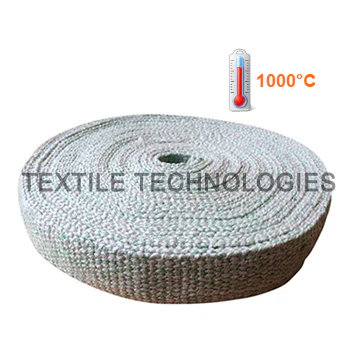
Ceramic Webbing Tape for high temperature sealing and insulation
Ceramic webbing is a proven solution for high temperature applications where a dependable seal and stable insulation are required. Woven as a webbing tape, it is manufactured from refractory ceramic fibre yarns and reinforced to retain mechanical strength during ongoing heat exposure.
In real-world high-temperature environments, ceramic webbing is commonly selected because it combines strong heat resistance with practical flexibility, allowing it to conform to uneven surfaces and maintain seals across repeated thermal cycling.
Ceramic webbing is designed to withstand temperatures ranging from typical furnace door conditions to more demanding process equipment, depending on the grade of reinforcement and the service conditions.
While ceramic fibre is rated to higher temperatures in optimum conditions, the organic content will burn off on first use. This note matters for applications where any initial smoke is undesirable.
Once conditioned, the tape provides stable thermal performance, with low thermal conductivity supporting effective thermal insulation in demanding industrial settings.
Performance benefits and material properties
For insulation and sealing, ceramic webbing tape offers a useful balance of thermal insulation, compressibility, and durability.
The thermal properties of ceramic fibre help reduce heat transfer, which can support safer working conditions and improved process efficiency in furnaces, boilers, kilns, ovens, and associated industrial equipment.
Key performance points:
- High temperature capability with strong heat resistance in service
- Good thermal insulation and insulation stability once conditioned
- Low thermal conductivity that supports reduced heat loss
- Flexible handling for installation around doors, flanges, and irregular profiles
- Reinforced constructions to maintain strength under extreme conditions
For heat performance, ceramic webbing is broadly resistant to most chemicals in typical industrial environments, though it is important to understand the limits of any ceramic material.
For example, exposure to hydrofluoric acids can be problematic for many high-temperature materials. If corrosive agents are present, selection should be reviewed against the operating temperatures, pressure, and the surrounding chemicals, including the most corrosive agents that may be present in the process.
Reinforcement options, glass versus wire
Ceramic webbing can be supplied with either glass filament reinforcement or wire reinforcement.
Glass reinforcement is often selected where mechanical support is needed but the service temperatures and design constraints allow it. Wire reinforcement is typically preferred where additional mechanical strength is required, especially where movement, abrasion, or repeated opening and closing can stress seals.
To guide selection, consider
- Operating temperatures and peak heat conditions
- Whether the tape will sit under compression as a door seal
- Any abrasion risk from doors, bolts, or moving parts
- The density needed for a stable seal profile
- Whether flexibility is more important than maximum rigidity
If the application includes ladders, bolts, or fixing points, ladder tapes can be a practical option. Ladder tapes and ladder style webbing allow easier fitting around fasteners and can help the seal sit correctly during installation.
For common furnace door layouts, ladder tapes are frequently specified to improve fit and reduce installation time.
Performance benefits and material properties
Ceramic webbing tape is suitable for a wide range of high temperature applications, particularly where static sealing and insulation are needed.
Common applications include ladder door seals on furnaces, kilns, industrial boilers, and process ovens, plus stress relieving operations such as welding and heat treatment. It can also be used as protective wrapping in areas where heat and thermal exposure must be controlled.
Typical applications include:
- Furnaces and kiln door seals
- Boilers and inspection hatch seals
- Ovens and heat treatment equipment seals
- Stress relieving zones and welding curtains
- Exhaust systems and exhausts where thermal insulation is required
- Industrial pipes, ducts, and equipment where heat loss reduction is ideal
- Cable protection and cables routing near hot surfaces
- Automotive heat shielding and wrapping around hot components
Where the application includes exhaust systems, pipes, or ducts, the primary value is insulation and thermal control rather than compression sealing.
In these cases, the correct thicknesses and the right constructions should be selected to protect components, reduce heat transfer, and maintain safety.

Finishing options
To improve performance and handling, ceramic webbing can be supplied with additional enhancements.
These options are selected based on the type of heat exposure, abrasion, and installation method.
Common options
- Silicone coating to bind fibres and reduce fibre fly
- Graphite dispersion for improved abrasion resistance and appearance
- Vermiculite dispersion to boost surface protection and increase temperature capability in service conditions
- Heat treatment to drive off volatiles and reduce initial smoke
- Self adhesive backing where installation speed and positioning are important
Self adhesive backing can be ideal for quick installation onto clean, dry surfaces, particularly when fitting seals in situ. Where a sacrificial adhesive layer is required, it can help keep the tape aligned during fitting, especially around corners or difficult access points.
Product range, availability, and pricing guidance
The ceramic webbing range covers multiple constructions, reinforcements, and enhancements, with widths typically supplied across a broad range to suit different sealing profiles.
Products are manufactured and supplied in standard formats, with options tailored to the required thicknesses, reinforcement type, and finishing.
Pricing varies depending on the chosen tape construction, reinforcement, width, and enhancement. For accurate prices, it is best to reference the selected product code and the required quantity.
For projects spanning multiple applications, consolidating sizes and constructions can help streamline ordering and improve value.
If you need help selecting the ideal construction for your application, contact the technical team with the operating temperatures, the type of heat source, whether corrosive agents are present, and whether the tape is used for seals, insulation, or wrapping.